Vincent van Gogh (March 30, 1853 - July 29, 1890)’s art continues to inspire us with energy, emotion, and originality. We admire his unique approach to brushwork and color, which makes his paintings a valuable source of learning for artists today.
His brushstrokes are bold and expressive, creating movement and rhythm across the canvas. Rather than blending colors smoothly, we see how he applied thick, distinct marks, allowing each stroke to contribute to the overall composition. This technique gives his paintings a strong sense of texture and makes even simple subjects feel alive. His use of color goes beyond description - it conveys feeling. Whether through the rich blues of Starry Night or the golden yellows of Sunflowers, his choices heighten emotion and mood. The contrast between warm and cool tones strengthens his compositions, showing us how color can shape the impact of a painting.
Beyond technique, what makes van Gogh’s work so remarkable is his originality. He did not follow popular styles or trends but instead created something personal and direct. His paintings reflect his thoughts and emotions, making each piece deeply engaging. As artists, we can learn from his willingness to take risks and express ideas in new ways.
Van Gogh’s legacy reminds us that painting is more than representation—it is a way of seeing and feeling. By studying his work, we gain not only technical insight but also a deeper appreciation for personal expression in art.
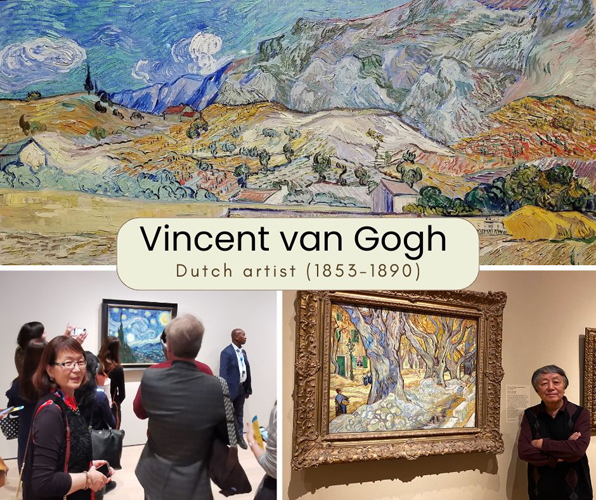
Artworks and gallery views include the following paintings by Vincent van Gogh:
Landscape at Saint-Rémy - Enclosed Field with Peasant (1889), oil on canvas. Indianapolis Museum of Art.
The Starry Night (1889), oil on canvas. The Museum of Modern Art.
The Large Plane Trees - Road Menders at Saint-Rémy (1889), oil on fabric. The Cleveland Museum of Art.
Read Featured Art Articles - Part One
Read Featured Art Articles - Part Two
Subscribe to our monthly e-Newsletter and stay updated with exhibitions and events!
604 Main Street, Zanesville, OH 43701